Friday, April 12, 2019

Personal Safety Unit


Kindergartners at both schools are engaged in our safety unit.  This is always one of those units that is so crucial and yet a little touchy.  When I watch the sad news stories about missing kids or see another Amber alert on my devices, I am reminded that even though these conversations can be hard or even uncomfortable, they are so important.  

Many of the students learn about personal space during PE classes. I expand on that by teaching they have 4 different personal spaces. That becomes the foundation for each of the subsequent lessons. The four spaces are also briefly reviewed in 1st and 2nd grade.
 We begin with stranger space.  The stranger space is 2 arm lengths. Students demonstrate that by stretching their arm out in front of them.  The challenge here is giving students a healthy respect for danger, but not scaring them into a fear of public places.  I stress that there are lots of good people in the world and just a few bad people (or scoopers).  The problem is that you can’t tell by looking at someone if they are good or not so you have to be careful with everyone just in case.  I share the book, Scoop, by Julia Cook with them.  In the book they learn that no one can scoop you if they can’t reach you.  That means we just keep a safe distance from people you don’t know.  We don’t have to be scared or run away or scream, just keep far enough away they can’t touch you.  And if a stranger steps toward you, then you simply step back.  We also learn about call lists and never going anywhere with anyone you weren’t expecting without checking with someone on your call list.  I also touch on other ways we can come in contact with strangers like the computer or phone.  We talk about the importance of never giving out personal information like your address or your name.
The next space is our friend space.  This is the space around us when we put our hands on our hips.  It’s close enough to read together, play games together, and have conversations, but not close enough to be uncomfortable.  This is the safe space for most of the people we know well. If we’re not sure, we can use the dinner rule.  Would my family have this person over for dinner? If yes, then they are probably a friend.  We review the stranger space and remember that if someone we don’t know steps toward our friend space we back up. 
The third space is our family space.  This is the space when we have are arms right next to us.  I also call this the snuggle space.  We talk about how it’s OK to snuggle up and watch a movie or give hugs and kisses to family, but we wouldn’t snuggle with our friends.  We practice some polite ways to let our friends know when they are in our family space.  Sometimes we just need to let them know they are in our space and it’s easily fixed.  But, if we ask and that person keeps getting too close or makes us uncomfortable we should let a grown up know.
The last space is our private space.  This is often where I get a few giggles because it’s the most uncomfortable to talk about but it’s so important that children know they have the right to say no!  I define this as the areas of your body covered by a bathing suit.  The kids demonstrate this space by giving themselves a hug.  I stress to the kids that when you’re little, a parent might help bathe you or change a diaper; and if you have a problem a doctor might need to see those areas.  But, otherwise no one has the right to be in those spaces except for you.  If someone is in your private spaces you should do 3 things: 1) Say no using your big voice, 2) Move away immediately, and 3) Tell a grown up you trust. We practice the big voice, which is a low and loud way to say no.  The big voice should sound really different than your play voice because it makes people look to see what’s going on.  They are never to use the big voice except in an emergency.  It’s not for the playground, but for those times when you really need someone to pay attention. 
Sadly, not all child assault or abduction cases are strangers so it’s important that children know that its OK to speak up if even if a known adult makes you uncomfortable.  We talk about trusting your instincts and listening to your uh-oh voice.  When you get that funny feeling and know something doesn’t feel right, it’s always Ok to say no and then immediately tell another grown up you trust.

Friday, March 22, 2019

Exploring Feelings


     So K-1 students are working on Feelings Awareness.  In Kindergarten we'll be focusing on vocabulary. Kids will often choose one of three feelings words to describe their emotions – Happy, Sad, or Mad.  And often, how they really feel is jealous, disappointed, or left out.  We are working hard to develop a vocabulary that helps them really describe what’s going on inside them.  And they love experimenting by using words like clever, blue, curious, irritated, and shocked.

 We will be reading a selection of books that expose them to different feelings vocabulary.  I'll be using the characters from the movie Inside Out to guide us in our discussions and lists.  We’ll also watch some video clips and do some fun activities.   One of the favorite activities I’ll be doing with the K’s later is the music activity where they get to decide how a piece of music feels and then move their bodies to demonstrate the mood.  They have a lot of fun – the budding dancers really get to show off!  And we get to talk about how we tend to move slower, faster, louder, etc. in response to our feelings.  We’ll also do a similar activity with color.
In first grade at Murray and 1-2 at Red Hill, we explore the more difficult feelings – the angry, upset, and fearful ones – we’ll also talk about strategies for dealing with them.   I will stress over and over all feelings are OK (it’s not bad to get angry), but it’s what you do with them that counts.  They love bubble breathing and using our sense of humor to combat new or scary situations.
Next week, we'll explore anger.  We talk about what happens in our brain and watch a video called "Just Breathe."  We discussed the importance of calming down before you try to problem solve. They had fun visualizing a jar of glitter while we practiced breathing, but more importantly they got to see how we all need different time and space to calm down. 


Friday, March 8, 2019

Growth Mindset

 
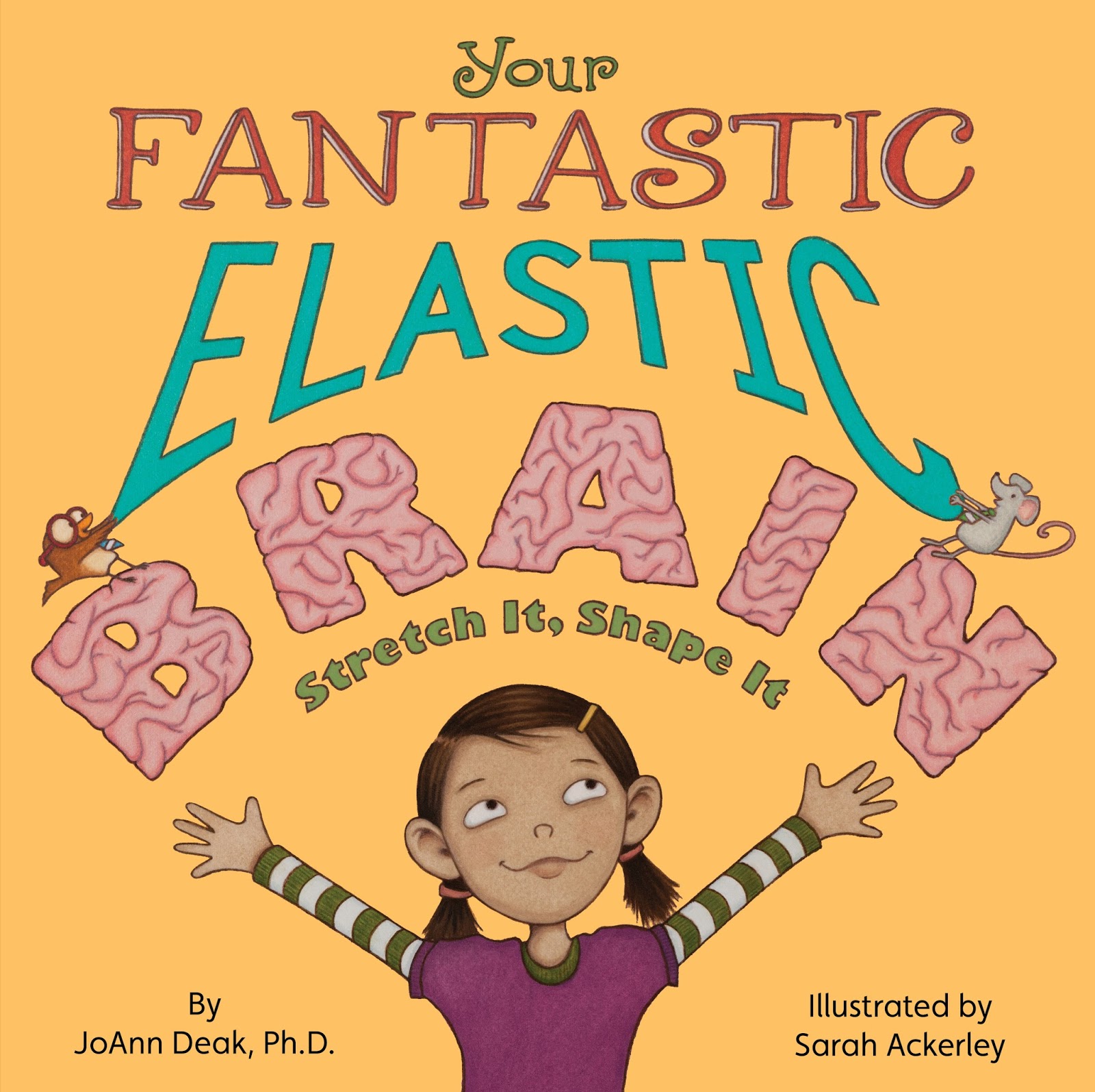
  Third and Fifth graders have been discussing a growth mindset vs. a "fixed" mindset during Core time.   We started with some brain basics.  We learned about neural pathways and synapses.  We even got to play with licorice when we looked at how those neural pathways get stronger and synapses get smaller the more we do something.  And we learned that our brains like challenges!  If things were always easy, our brains would fall asleep instead of growing and getting stronger. And if we never made a mistake, we couldn't learn something new!
 
      Next we talked about the "Power of Yet."  Adding the word yet, makes a powerful difference in our language and thinking.  Imagine the difference between "This is hard. I can't do it." and This is hard. I can't do it YET." We had fun with all kinds of brain games from word puzzles to picnic patterns as we looked at how our brains learn patterns when we stick with something.
   
     We also spent time talking about GRIT.  That's the combination of determination and resilience. We looked at strategies that help us push through challenges, like self talk.  And we even measured our grittiness.  We also talked about how everyone is unique and how our own strengths and flaws drive each person's grit in different ways.

Friday, March 1, 2019

Kelso's Choices


1st Graders at Murray and 3-4 kids at Red Hill are working on a unit on Kelso’s Choices.  Kelso is a pretty smart frog that teaches students the difference between big problems and small problems.  Big problems are those that are scary or recurring and should be shared with a grown-up they trust. Small problems are those that are more everyday problems that may cause you to feel irritated or annoyed.  Kelso encourages students to recognize they are smart enough and capable of handling many of these small problems on their own.  And then he shares 9 choices they have to do this.  I suggest that can try 2 of these before deciding they need to take it to a teacher (reminding them anything dangerous or uncomfortable should always go right to a grown up).
We'll discuss all nine choices and will be practicing them.  They are:
· Walk Away
· Tell Them To Stop
· Talk It Out
· Make A Deal
· Share and Take Turns
· Apologize
· Wait and Cool Off
· Go To Another Game
· Ignore

Monday, February 18, 2019

School to Work Skills

     5th graders are hard at work on a school to work skills unit.  I started by letting them know that they have a job right now not unlike the adults in their lives.  As a student they have specific tasks they are expected to carry out like every job in the work force. They are paid with grades and knowledge and even receive promotions like their occupational counterparts.  I have shared with them that there are essential skills that every worker should have no matter what kind of job they have, be it service worker, professional, athlete, or politician.  When they utilize these skills effectively they are productive and successful workers.


·         We started off with organization and did an activity that demonstrated there isn’t any right way to organize and that it can be very personal.  The important idea is that everything has a home and when you can find it easily you are more efficient. 

·         The second skill we did was focusing.  I also call it “tuning in.”  I compare their brains to a radio.  A radio can actually tune in to more than one station, but it’s hard to get all the information and really understand everything you are hearing.  We discussed strategies for helping your brain really tune in to the right station (teacher, math, piano practice, mom, etc.).  Then we played a game that has been one of their favorite activities so far.  It requires them to tune in to things happening around them and watch for a cue and then follow a set of directions.

·         Next we'll draw homework portraits that allow them to think about their homework habits.  We discussed how good workers make sure they have time for both work and play, but that they can also separate them to be able to do their best at work time.  We discussed best times for working, environment, and creating a work space.

·         Then we'll work on Time Management.  We’ll make schedules and do an activity that requires them to be plan a span of time and to also account for the unexpected.  We’ll talk about how “frontloading” a schedule can help them be ready for things that just come up.

·         We’ll finish with understanding yourself as a learner and a worker. We’ll do a color quiz where they will have to think about their preferences in work environments and their strengths.  They’ll discover tendencies about how they learn and also the environments they thrive in (working alone or in a group/ indoors or outdoors / with math, human services / science etc.)

Tuesday, February 12, 2019

Conflict Resolution


Image result for conflict resolution kids
     Third graders at Murray have been working on a Conflict Resolution unit.  We started by talking about the importance of self control and making sure you are in control of your emotions first.  We studied the parts of our brain that react when we are angry.  If you want to be able to successfully think through a problem your wise owl needs to be on the nest (prefrontal cortex) and not your barking security dog (amygdale).

 Next we worked on I-messages as a way to respectfully start a conversation and then active listening to ensure both people get to speak and be heard.  We finished up with some practice in brainstorming.

Friday, February 1, 2019

CARES: Self-Control


February's theme is Self-Control.  Kindergartners had a blast trying to see if they could keep from jumping up to pop bubbles or avoid eating one marshmallow to earn 2!  We will also be reading a really fun book - My Mouth Is A Volcano.  Louis has a difficult time with erupting (interrupting) and learns some self control strategies to control his words.
In 1-2, we're talking about self control in regards to Peer Pressure.  Wagner finds himself in a tough spot when some of his classmates are encouraging him to make a bad choice.  He doesn't want to be left out, but he wants to do the right thing too.  Can he use self control and keep from going with the pressure?

cookie monster self control
Check out CM's thoughts on Self Control
3rd & 4th graders are looking at self -control with big emotions.  We talked about what happens in our brains when we are faced with stress or fear or frustration and why it's hard to be in control. But, we also talked about how our amazing bodies give us signals to warn us so we have time to make choices that help us stay in control.
5th graders are looking at self control and how it plays into their work habits - controlling distractions and setting priorities to meet responsibilities.